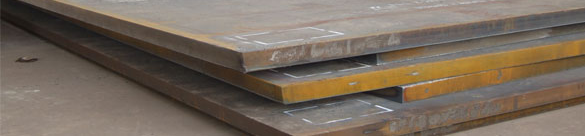
C45 is a medium-carbon, non-alloy engineering steel with a typical carbon content of 0.42–0.50%. It is widely chosen for shafts, gears, pins, and other machined components that need a useful balance of strength, hardness, and machinability. Buyers who search for a C45 steel plate supplier India usually want more than a price: they want to know the chemical composition, how the grade behaves after heat treatment, and which grades can safely stand in for it. This guide covers those questions in plain language and explains what to verify before you order. It also shows how Sikka Metals Pvt. Ltd., based in Faridabad, supports industrial buyers who need C45 steel plates and sheets.
What Is C45 Steel?
C45 is a medium-carbon, non-alloy engineering steel, generally specified under EN 10083-2 or its successor EN ISO 683-1. Its material number is 1.0503, and it is also written as C45 grade steel. The "45" in the name refers to the average carbon content of about 0.45%.
That carbon level places C45 between low-carbon mild steel and high-carbon tool steels. Mild steel is easier to weld and form but cannot be hardened to the same degree. C45 offers higher strength and can be heat-treated or surface hardened, which is why it appears so often in shafts, gears, pins, rollers, and general machine components. Variants such as C45E and C45R carry tighter limits on certain elements, so the exact variant should be named when ordering.
C45 Steel Composition
The table below shows typical composition limits for the C45 grade under the relevant European specification. Always compare these figures with the Mill Test Certificate (MTC) for the material you receive.
|
Element
|
Typical composition by weight
|
|
Carbon (C)
|
0.42–0.50%
|
|
Silicon (Si)
|
0.15-0.35%
|
|
Manganese (Mn)
|
0.50-0.80%
|
|
Phosphorus (P)
|
Maximum 0.025%
|
|
Sulphur (S)
|
Maximum 0.025%
|
|
Chromium (Cr)
|
0.20-0.40%
|
Carbon is the main strengthening element. A higher carbon content raises strength and hardness potential but reduces ductility and makes welding more demanding. Manganese improves strength and hardenability and helps offset the harmful effect of sulfur. Silicon acts mainly as a deoxidizer during steelmaking and contributes a little to strength.
Phosphorus and sulfur are limited because excess amounts can make steel brittle or reduce its toughness. Composition limits can differ between C45 variants and between C45 and its equivalent grades, so the specified standard matters.
C45 Steel Properties
The mechanical behavior of C45 depends on its delivery condition and section size. For that reason, no single set of tensile strength, yield strength, or hardness figures applies to every plate. Always refer to the standard and the supplier's certificate for the condition you are buying.
Strength and Hardness
Carbon content gives C45 useful strength for engineering components. Brinell hardness and tensile strength change with processing: as-rolled, normalized, annealed, and quenched-and-tempered materials all behave differently. Thicker sections generally respond differently to heat treatment than thin ones.
Machinability
C45 is commonly turned, drilled, and milled into finished parts. Good machinability in the normalized or annealed condition is one reason it is a standard choice for general machine components.
Heat Treatment
Normalizing refines the grain structure and gives a more uniform base condition. Annealing softens the steel for easier machining. Quenching and tempering raises strength and hardness, with the final balance depending on the tempering temperature and section size.
Surface Hardening
C45 can be surface hardened by induction or flame hardening. This produces a hard, wear-resistant outer layer while the core stays tougher, which suits shafts and gear teeth.
Weldability
Because of its carbon content, C45 needs care when welded. Procedures, preheating, and post-weld treatment should be assessed by qualified personnel before fabrication begins.
C45 Material Equivalent Grades
C45 carries the material number 1.0503, and buyers often need to match it with grades from other standards. The table lists common comparisons.
|
Standard / system
|
Grade
|
Relationship
|
|
EN / DIN
|
C45 / 1.0503
|
Reference grade
|
|
AISI / SAE
|
1045
|
Commonly treated as a close equivalent
|
|
JIS
|
S45C
|
Commonly treated as a close equivalent
|
|
Indian standard
|
45C8
|
Similar medium-carbon grade; verify the applicable specification.
|
|
British standard
|
080M46
|
Commonly cited as a close equivalent
|
|
British designation
|
EN8D / 080A42
|
Not automatically identical; verify chemistry and standard.
|
When buyers ask for a C45 material equivalent, AISI 1045 and JIS S45C are the most common answers. 45C8 and 080M46 are also referenced as similar grades. Even so, "equivalent" rarely means "identical." Each standard sets its own composition limits and testing rules.
EN8D in particular should not be treated as automatically identical to C45. Before any substitution, confirm the standard, the chemistry, and the MTC.
Common Uses of C45 Steel Plates
The following applications show how C45 is used in practice. The final product form, whether plate, sheet, bar, or forging, depends on the component and the manufacturing process.
Shafts and Axles
C45 gives strength and machinability for shafts and axles, and with suitable heat treatment, it offers good wear resistance.
Gears and Pinions
Selected gears and pinions use C45 where machinability and the option of surface hardening are important.
Industrial Machine Parts
Pins, rollers, studs, and bushes are routine uses. These parts are machined to size and, where needed, hardened.
Automotive and Engineering Components
C45 is used in selected mechanical parts, depending on design and specification. It is not a universal choice, so the component's loading and service conditions should drive the decision.
Forged and Machined Components
Industrial forgings and machined parts use C45 where controlled material properties are needed. This overview of C45 steel plate uses shows why the grade is a staple in workshops and fabrication units.
C45 Steel Plate vs Other Engineering Steels
C45 has a higher carbon content than common low-carbon mild steel. That is why it may be selected when greater strength and hardenability are needed. A claim that C45 is simply stronger should always name the comparison grade and the condition, because a mild steel plate and a heat-treated C45 plate are very different materials.
C45 is also not a direct replacement for every alloy steel. Grades such as 42CrMo4 contain chromium and molybdenum, giving them different hardenability and toughness characteristics, particularly in thick sections. For parts that need abrasion resistance rather than machinability, wear-resistant steels such as ABREX and Hardox wear-resistant plates serve a different purpose. Buyers comparing Carbon 45 Sheets in Delhi NCR with other steels should confirm the application before choosing a grade.
For industries dealing with heavy abrasion, material handling, mining, construction, and equipment wear, selecting the right wear-resistant steel plate can help improve component durability and reduce maintenance requirements. Explore our guide on the top 7 applications of wear-resistant steel plates in Delhi NCR to understand where these specialized steel plates are commonly used and how they support demanding industrial operations.
What to Check Before Buying C45 Steel Plates
A clear purchase specification avoids most grade and documentation problems. Use this checklist:
- Exact grade: C45, C45E, or another specified variant.
- Applicable material standard.
- Required thickness, width, and length.
- Delivery condition: as-rolled, normalized, annealed, or heat-treated, as applicable.
- Chemical composition and mechanical-property requirements.
- Material Test Certificate and heat-number traceability.
- Cutting, machining, and delivery requirements.
The MTC links the material you receive to its heat number and test results, so it is the main proof that the plate matches your order. Industrial buyers sourcing C45 plates in Faridabad should ask for it with the quotation, not after delivery.
Choosing the right C45 steel plate supplier is equally important as selecting the correct material grade. Buyers should evaluate product quality, material test certificates, available dimensions, stock reliability, pricing, and delivery support before placing an order. To make an informed purchasing decision, read our detailed guide on 7 things to check when choosing the best C45 steel plate supplier in North India.
Where to Buy C45 Steel Plates in India
When choosing a C45 steel plate supplier in India, look beyond general claims. A reliable supplier should state the grade and standard clearly, supply an MTC with traceability, and be open about dimensions and availability. Ask whether the plate is supplied in the delivery condition your process needs.
Sikka Metals Pvt. Ltd. lists C45 on its product page, and it works as an industrial steel supplier in India serving engineering and fabrication buyers. Current stock, sizes, and delivery coverage should be confirmed at the time of inquiry rather than assumed.
C45 Steel Plate Supplier in Delhi NCR and Faridabad
Faridabad is an established industrial hub in the NCR region, home to machining, fabrication, and engineering units that regularly source engineering steel. Sikka Metals Pvt. Ltd. is located in Faridabad, Haryana, which gives local buyers a practical point of contact.
If you are looking for a C45 steel plate stockist in Delhi NCR, share your grade, thickness, dimensions, and quantity so availability can be checked against your requirement. Buyers outside the NCR can inquire in the same way.
Frequently Asked Questions
What is C45 steel used for?
C45 is used for shafts, axles, gears, pins, rollers, and other machined or forged components that need strength, machinability, and the option of heat treatment.
What is the chemical composition of C45 steel?
Typical limits are 0.42-0.50% carbon, 0.15-0.35% silicon, and 0.50-0.80% manganese, with phosphorus and sulfur each limited to 0.025% maximum. Check the MTC for actual values.
Is C45 steel the same as AISI 1045?
AISI 1045 is commonly treated as a close equivalent, but the two follow different standards. Confirm chemistry and testing requirements before substituting one for the other.
What is the Indian equivalent of C45 steel?
45C8 is the Indian medium-carbon grade, usually compared with C45. Verify the applicable specification and certificate, as limits may differ slightly.
Is C45 a high-carbon or medium-carbon steel?
C45 is a medium-carbon steel. Its carbon content of roughly 0.42–0.50% sits above mild steel but below high-carbon tool steels.
Can C45 steel be heat-treated?
Yes. C45 can be normalized, annealed, or quenched and tempered, and its surface can be induction or flame hardened. Results depend on section size and process control.
Is C45 steel suitable for machining?
Yes. C45 is widely turned, drilled, and milled, and machinability is generally best in the normalized or annealed condition.
Where can I buy C45 steel plates in India?
Choose a supplier that provides grade clarity and an MTC. Buyers needing a C45 sheet from the Faridabad source can inquire directly with Sikka Metals Pvt. Ltd. about grade, size, and availability.
Contact Sikka Metals Pvt. Ltd. for C45 Steel Plates
Looking for a reliable C45 steel plate supplier in India? Connect with Sikka Metals Pvt. Ltd. for your industrial steel requirements. Share your required C45 grade, thickness, dimensions, and quantity to receive product details and discuss your procurement needs. Explore our C45 steel plates and contact our team for product availability, specifications, and pricing inquiries. Get in touch today to find suitable C45 steel plate solutions for your engineering, fabrication, and manufacturing projects